Continuous chemical processes, mirrored in real time.
Distillation columns, reactor trains, and heat exchanger networks — all modeled from first principles. Twynvex keeps a live physics-based twin of your process running alongside actual production, forecasting yield and flagging deviations before they compound.
Request Pilot Access
What chemical plant managers lose sleep over.
Feed composition variability
Feedstock quality varies batch to batch, crude to crude, season to season. Without a process model, operators don't know how today's feed will affect tomorrow's yield until it's already too late to correct.
Heat exchanger fouling
Fouling is slow, insidious, and expensive. By the time temperature differential catches it, you're already past the point of easy correction. A real-time heat transfer model catches it weeks earlier.
Unplanned shutdowns
Most unplanned shutdowns in continuous chemical processes are predictable — in hindsight. The warning signs are there in the sensor data. The problem is correlating them before the trip condition fires.
Your distillation column, modeled to the tray.
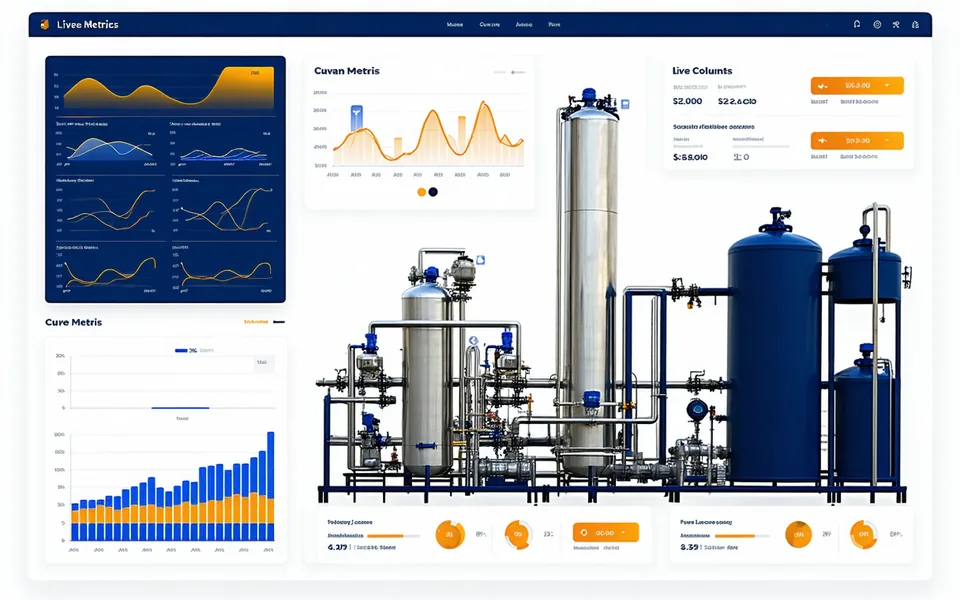
Twynvex encodes the actual vapor-liquid equilibrium equations, tray efficiencies, and reboiler heat duties specific to your column. Not a black-box ML model — a real process model you can inspect and validate.
When overhead purity begins to drift, the twin locates the root cause across a list of candidates — reflux ratio, feed composition, tray flooding, reboiler performance — and tells the operator which variable to adjust, and by how much, to recover purity within the prediction horizon.
- Distillation columns: VLE equations, tray-by-tray mass balance
- Reactors: kinetic rate expressions, residence time distribution
- Heat exchangers: fouling index tracking, U-value trend
- Compressors: polytropic model, seal condition indicator
If you're running distillation columns or CSTR trains, let's talk.
The scoping call starts with your process configuration — which unit operations, what sensor density, what historian tags you have available. We'll tell you honestly whether your current data infrastructure supports a physics model, and what we'd need to build one that's worth running.